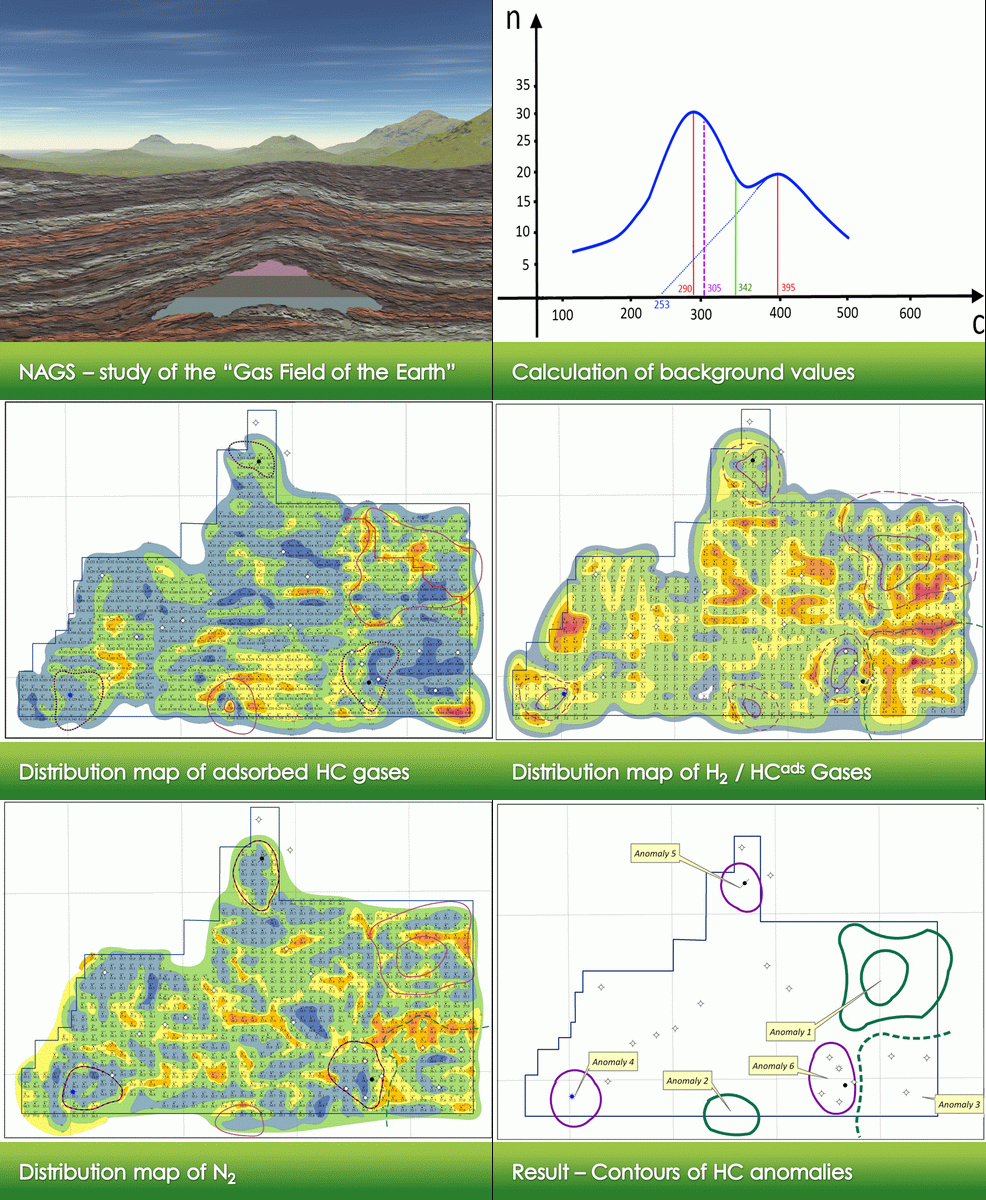
Naturally
Adsorbed Gas Survey (NAGS) – Discovers anomalies in the adsorbed
gas content of rock samples collected just below the soil level
indicative of hydrocarbon prospectivity. NAGS is based on the concept
of the gas field of the Earth, a natural flux of gases composed
of all of the light homologs of methane as well as other inorganic
gases, described as “the background gas field”. As these gases ascend
to the surface and interact with hydrocarbon-saturated formations,
they undergo alteration in several ways (mechanically, physically,
and chemically), and the resulting anomalies in the distribution of
gases become manifest at the surface. Such anomalies, which
are a computational result of the analysis of adsorbed gases in
rock samples near the surface, only occur when hydrocarbon deposits
are present in the subsurface. These anomalies are relational constructs
developed in the NAGS model and appear as ring-shaped and crest-and-ring-shaped
structures present on the Earth’s surface in terms of the distribution
of gas components, various gas proportions, ratios, contrast curves,
etc. Contrary to other gas-geochemical technologies that profile
subsoil atmosphere and hydrosphere gases (which are highly mobile
and not informative), NAGS performs studies of gases firmly enclosed
in rock material and stable at surface temperature and pressure.
Known as “adsorbed gases”, they accumulate in rocks during the course
of migration of gas-saturated fluids at the maturation stage of
regional geology. Hence, their characteristics are significantly
more informative in contrast to the free gases of other, well known
geochemical studies. NAGS profiles gas-concentration anomalies as
well as changes in the surface composition of gases. Contrary to
the traditional view that surface geochemical anomalies are strictly
a result
of the migration of hydrocarbon gases from their source deposits,
NAGS also accounts for the diffusion process (change in the gas field).